2 days in Gyeongju, where the tickets stopped in 2023
Gyeongju was the capital of Silla for close to a thousand years, and the tombs of its kings are still sitting in the middle of the modern town — grass mounds the size of small hills, with a coffee street running along one edge. It is usually described as a museum without walls. What almost no English guide has caught up with is that most of it is now free.
![Gyeongju Bulguksa Temple [UNESCO World Heritage]](https://tong.visitkorea.or.kr/cms/resource/03/2678603_image2_1.jpg)
- Bulguksa, Seokguram, Daereungwon and Cheomseongdae no longer charge admission. Sixty-five temples holding state-designated heritage dropped their fees on 4 May 2023, and Gyeongju city dropped Daereungwon's ₩3,000 ticket on the same day. Guides still quoting ₩5,000 or ₩6,000 are three years out of date.
- The bus up to Seokguram runs once an hour. Bus 12 leaves from across the Bulguksa car park at roughly 40 minutes past the hour. Miss it and the next one is an hour away, on a mountain with nothing to do at the stop.
- Gyeongju has no closing day. After Seoul, where every palace shuts on a different weekday, this is worth saying plainly: the sites below open every day of the year, including Mondays and Tuesdays.
Getting there, and getting around
| From Seoul | KTX from Seoul Station, about 2 hours 15 minutes. Note the station: the old town-centre station closed in 2021 and all KTX services now use Gyeongju Station (the former Singyeongju), which is 8.2 km outside the centre. Budget 20 minutes and a bus or taxi on each end — it is not a walk. |
|---|---|
| From Busan | Close enough to do as a day trip, and many people do. The night at Donggung Palace below is the argument for staying over instead. |
| Getting around town | Walk. The measured distances between Day 1's stops are 200 m to 900 m — Daereungwon to Hwangnidan Street is 200 m, Cheomseongdae to the Wolseong palace site is 630 m, and Wolseong to Donggung Palace is 450 m. The whole of Day 1 is about 3 km of walking spread over a day. |
| Bicycles | Gyeongju is flat and rents bicycles everywhere — there are shops by the bus terminal and around Daereungwon. The city's public scheme, Tashilla, is app-based and set up for Korean phone numbers, so a shop rental is the simpler option for visitors. |
| Getting to Bulguksa | Bulguksa is 11.4 km from the tombs — the one part of Gyeongju you cannot walk to. City buses 10, 11, 700 and 711 run there from downtown, about 40 minutes. |
The old capital, on foot
Tombs, an observatory, a palace site and a pond — all within 2 km, finishing after dark.
- 09:00
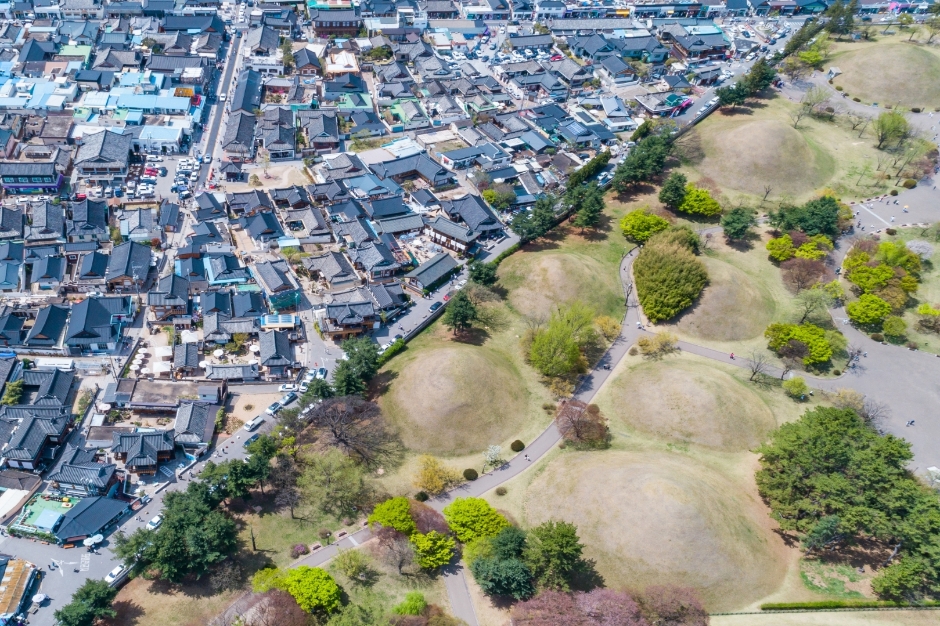
Daereungwon Tomb Complex
Twenty-three royal tombs of the Silla kings, grassed over into smooth green mounds up to twenty metres high, with paths winding between them. It reads as a park until you register the scale of what you are walking around. Free since May 2023 — the ₩3,000 gate is gone.
The exception: Cheonmachong, the one tomb that has been excavated and opened up so you can walk inside, still charges separately. It is worth it — the grave goods found here included a gold crown and the birch-bark saddle flap painted with a white horse that gives the tomb its name.
 10:30200 m
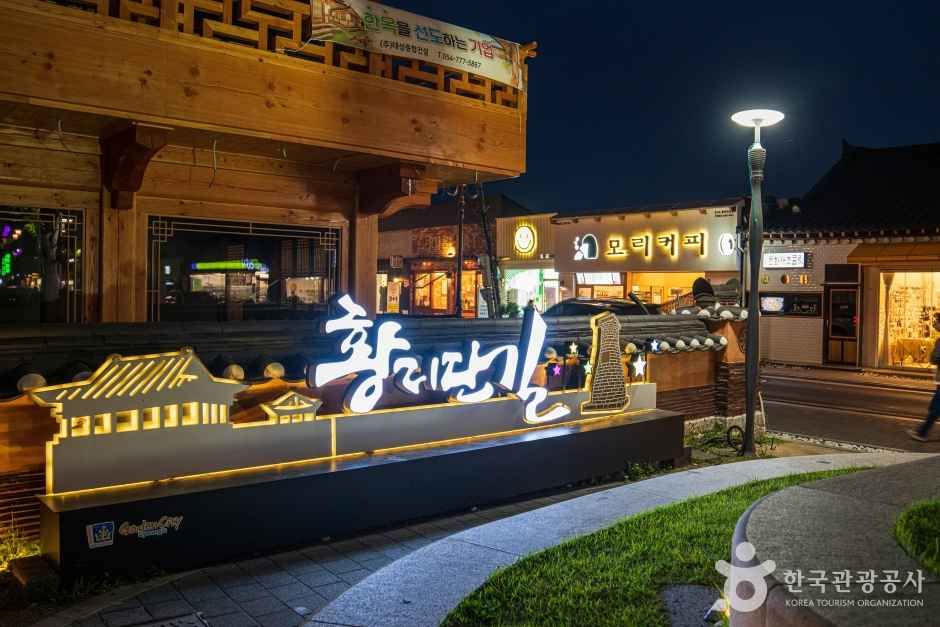
Hwangnidan Street
A lane of single-storey traditional houses converted into cafés, dessert shops and hanbok rentals, running right along the tomb park's edge. The name is a joke — Hwangnam-dong crossed with Seoul's Gyeongnidan-gil — and it is the reason Gyeongju now reads as a weekend city rather than a school-trip stop.
It is also where the hanbok rental shops are, if you want the photographs. Unlike Seoul, there is no palace discount to chase here; nothing you are visiting today charges anything to begin with.
 11:30300 m
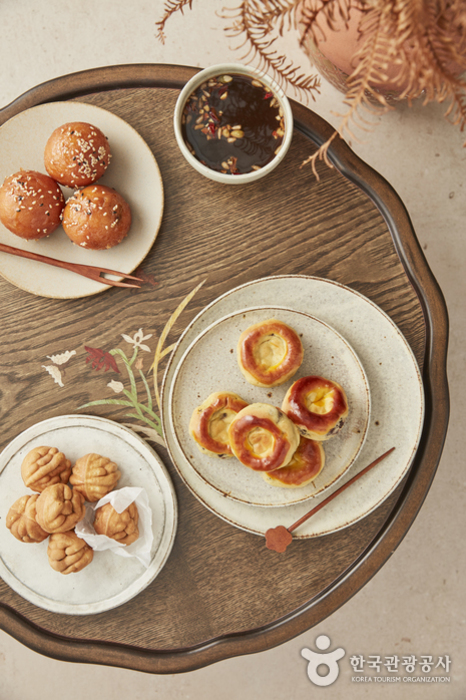
Hwangnam-bbang
A thin pastry filled almost entirely with red bean paste, made in Gyeongju since 1939 and still sold from the original shop. Expect a queue and a box rather than a café — most people buy ten to take home. It is the one food souvenir the city is actually known for.
 13:00850 m
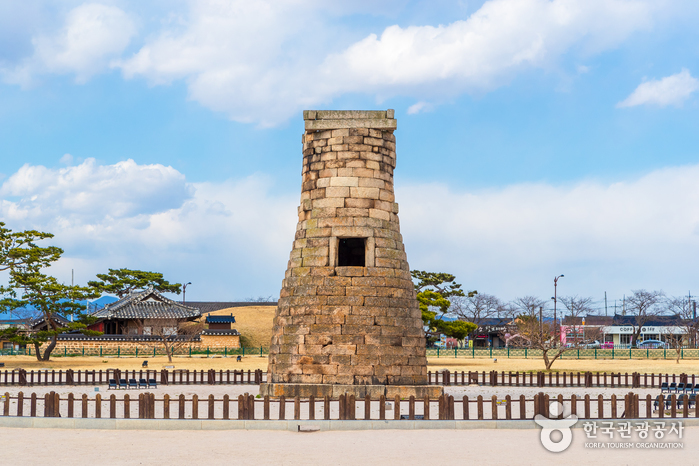
Cheomseongdae
A 9-metre bottle-shaped tower of cut granite, built in the 630s under Queen Seondeok and generally called the oldest surviving astronomical observatory in East Asia. It is small, it is out in the open, and it takes ten minutes — but it has stood on that spot for fourteen centuries without being rebuilt, which is rarer in Korea than people realise.
 15:00630 m
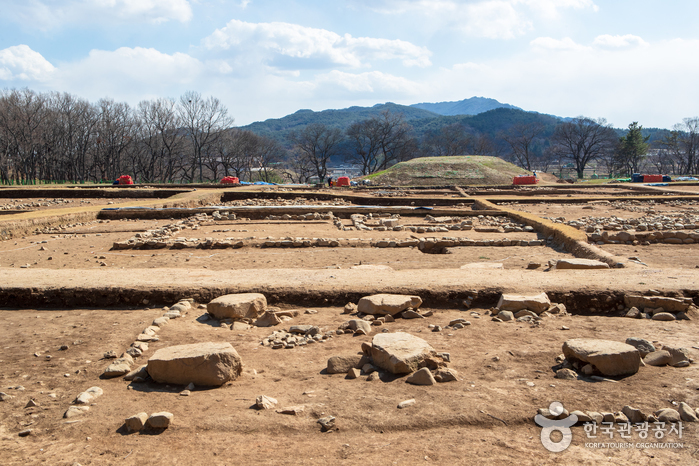
Wolseong Palace Site
The Silla royal palace stood here for most of the dynasty. What survives is the earthwork — a long crescent ridge, which is what banwolseong, half-moon fortress, means — with excavation still going on across the flats. There is not much to see in the conventional sense, and that is rather the point: you are walking across the floor of a palace.
- 17:00450 m
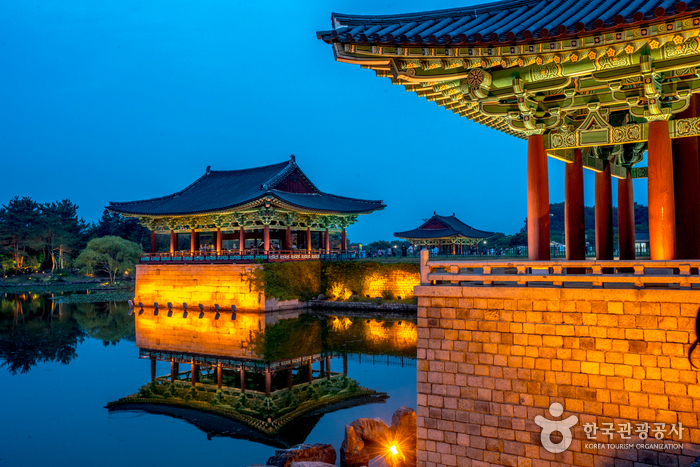
Donggung Palace and Wolji Pond
This is why you stay the night. The Silla crown prince's secondary palace, with reconstructed halls set around an artificial pond dug so that no single viewpoint shows you the whole of it. After dark the halls are lit and the reflection doubles them.
Open 09:00 to 22:00, last entry 21:30, ₩3,000 for an adult. A heritage site open until ten at night is unusual in Korea, and it is what makes Gyeongju an evening city rather than a day trip. Arrive around sunset so you get the site in daylight and then watch the lights come up.
 Evening2.2 km
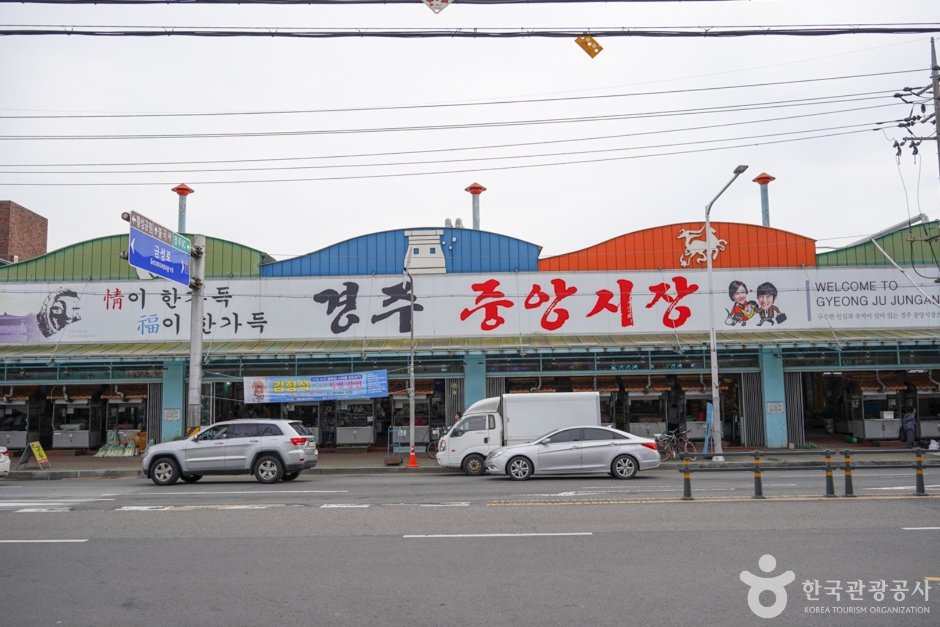
Dinner — Jungang Market or the ssambap street
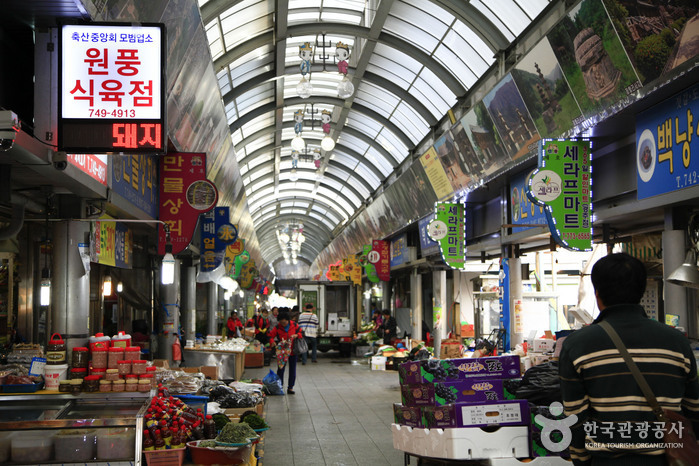
Jungang Market is the working market, with a street-food alley attached. For a sit-down meal, Ssambap Street near the tombs serves the local set meal — a dozen-odd small dishes with leaves to wrap them in. Both are a short taxi ride from Donggung, or a 25-minute walk back the way you came.
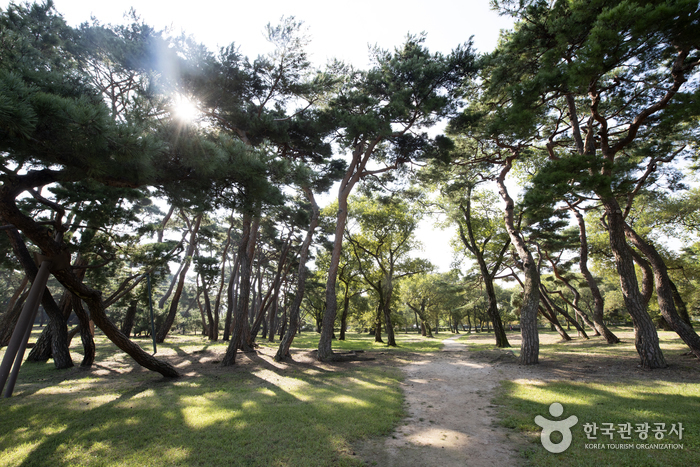
Bulguksa and Seokguram, up Tohamsan
Two UNESCO sites on one mountain, 11 km out of town. Both free. The connecting bus is the thing to plan around.
Avoid: Arriving at Seokguram after 15:00
- 09:00
Bulguksa Temple
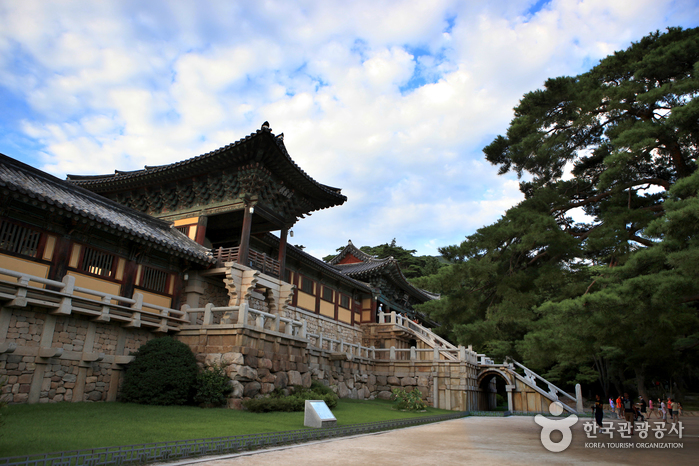
Built in 751 and the most complete surviving expression of Silla Buddhist architecture — twin stone pagodas in the main courtyard, Dabotap and Seokgatap, that are deliberately opposite in character: one ornate, one austere. The stone terraces and bridges below the halls are original eighth-century work.
Free, and open every day of the year. Gates open at 09:00; last admission is 17:00 from November to January, 17:30 in February and October, and 18:00 from March to September.
- 11:40Across the car park
Bus 12 up to Seokguram
The bus leaves at about 40 minutes past the hour, from the stop across from the main Bulguksa car park, and takes around 20 minutes to wind up Tohamsan. It runs roughly hourly, the midday departure sometimes slips while the driver eats, and there is no alternative short of a long uphill walk or a taxi.
Check the posted timetable when you arrive at Bulguksa, not before. Then plan your time in the temple around the bus rather than the other way round.
- 12:00
Seokguram Grotto
A granite dome built into the hillside around a 3.5-metre seated Buddha, facing east over the sea. It is the single finest object in Korean Buddhist art, and it is now free to enter as of May 2023.
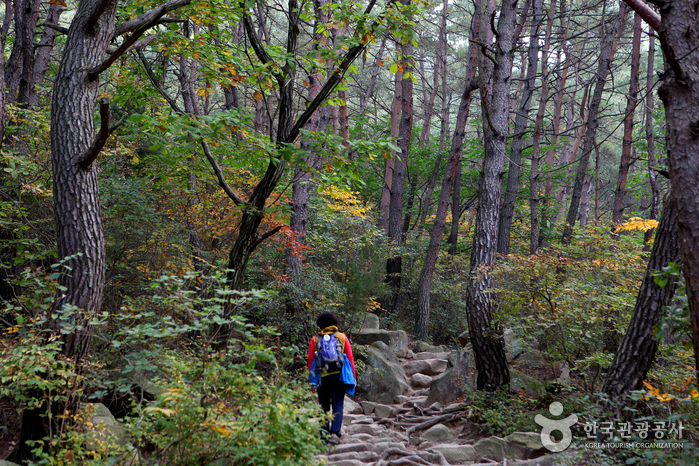
Manage your expectations about the view. The chamber has been sealed behind a glass wall since conservation work in the 1960s, so you see the Buddha from the antechamber rather than walking around it, and photography inside is prohibited. The approach path along the hillside, and the view east from the terrace, are a real part of the visit.
 Afternoon
Then pick one: Namsan, Yangdong, or Bomun
Namsan is the serious option — a whole mountain of Buddhas carved into the rock and pagodas left where they fell, essentially an open-air sculpture park you have to hike. Allow half a day and proper shoes.
Yangdong Village is a UNESCO-listed Joseon aristocratic village 24 km north, still lived in. It is a different period and a different Korea from everything else on this page.
Bomun is the lakeside resort district, 7 km from the centre, and is where most of the larger hotels are — useful to know when you book, since staying there puts you outside walking distance of Day 1.
![Gyeongju Yangdong Village [UNESCO World Heritage] (경주 양동마을 [유네스코 세계유산])](https://tong.visitkorea.or.kr/cms/resource/62/3506362_image2_1.jpg)
When to come
Gyeongju peaks twice. In early April the whole town goes under cherry blossom, and the road around Bomun Lake is one of the best-known blossom drives in the country — it is also the single most crowded week of the Gyeongju year. In early November the colour arrives; the southern peak window runs 5–13 November, and the tombs and temple grounds hold it well. The autumn foliage guide has the regional timings.
Winter is cold and quiet and every site here stays open — which, given that almost none of them charge, makes Gyeongju a genuinely good off-season city.
What else is on
Gyeongju runs festivals through the year, and the historic area hosts night-opening events that do not follow a fixed schedule. Put your dates into the Trip Planner to see what falls inside your trip, or browse everything we have in Gyeongbuk.