Korea in winter, and the difference between cold and snowy
Korean winter is colder and drier than most visitors expect. Seoul sits below freezing for most of January, but it does not sit under snow — the winter here is a hard, bright, continental cold with very little precipitation. If you are coming for snow, you are coming for Gangwon, and that is a different trip from a city one.

- Seollal falls on Sunday 7 February 2027, with the holiday running Saturday 6 to Tuesday 9. Intercity trains and buses sell out weeks ahead and a lot of small businesses shut. It is the one week to plan around, in either direction.
- The ice festivals are a January thing, not a winter thing. Hwacheon, the big one, runs 9–31 January 2027. Come in December and the ice is not thick enough; come in February and it is over.
- Ski resorts open in November but are thin until late December. Opening day means one or two machine-made runs. For a full mountain, aim for the back half of the season.
How cold, actually
| Seoul | January is the cold month: roughly −6 °C at night and a degree or two above freezing by day. It is a dry cold with a lot of sun, which makes it more bearable than the same numbers in a damp climate — but the wind off the Han River is not. |
|---|---|
| Gangwon | The mountain east: several degrees colder again, and where the snow actually is. Pyeongchang, Hwacheon and the Daegwallyeong plateau hold snow cover for weeks at a time. This is where you go for a white landscape. |
| Busan and the south | Mild by comparison — usually above freezing in the day and it rarely snows. If you want winter without the cold, the southern coast is a real option, and it is nearly empty in February. |
| Jeju | Mildest of all at sea level, but Hallasan gets deep snow and the summit route closes on short notice. Do not plan a winter Hallasan day without a fallback. |
| The pattern | Koreans describe winter as samhan-sa-on — three cold days, four mild ones — and it is still broadly how the season moves. A brutal week is usually followed by a soft one, so a single bad forecast a fortnight out means very little. |
Seollal: the week to plan around
Seollal, the lunar new year, is Sunday 7 February 2027. The public holiday runs Saturday 6 to Tuesday 9 February — the 9th is a substitute day, because the holiday itself falls on a Sunday.
What this means in practice is a mass migration: most of the country travels to a family home and back inside four days. KTX seats are released and taken far in advance, motorways are solid, and independent restaurants and smaller shops close for two or three days. Department stores, convenience stores and the major attractions stay open.
Under the rule published by the Royal Palaces and Tombs Centre, a palace's regular closing day does not apply when it falls on a public holiday — the palace opens, and the closure moves to the first non-holiday day afterwards.
For 2027 that means Gyeongbokgung, which normally shuts on Tuesdays, should be open on Tuesday 9 February, and Changdeokgung and Deoksugung, which normally shut on Mondays, open on Monday 8 February — with the closures landing instead on Wednesday 10 February. If you are in Seoul that week, the Wednesday is the day to keep free for something else.
The upside is real, though: the palaces and the mountains are at their quietest in the days either side, and Seoul itself briefly empties out. If your dates are fixed and they overlap Seollal, stay in one city and stop trying to move around the country.
Ice, and the festivals built on it
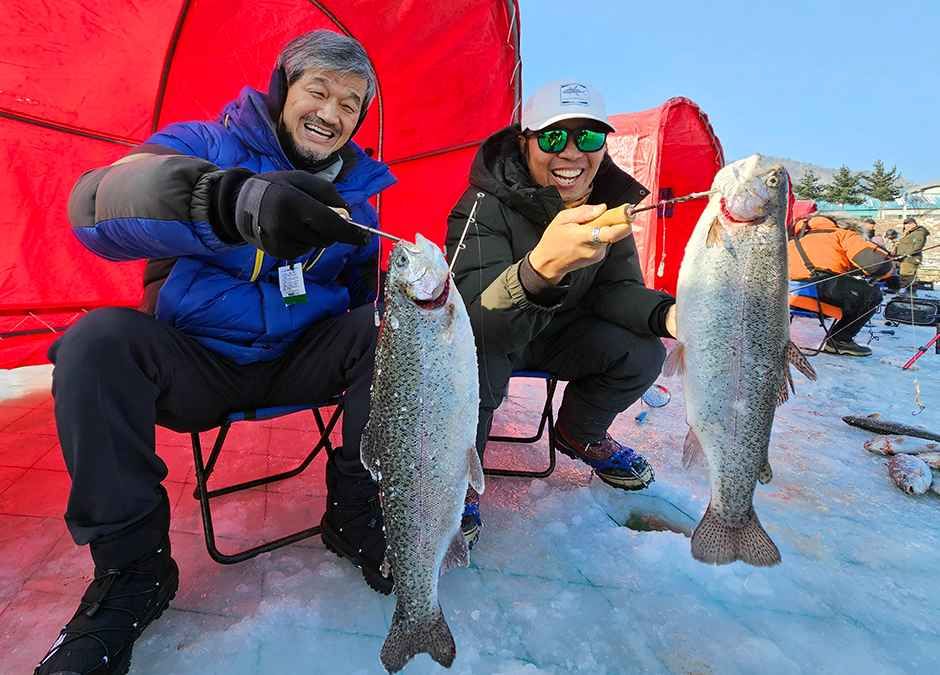
The Hwacheon Sancheoneo Ice Festival is the one that travels — CNN put it on a list of winter wonders and it has been drawing over a million visitors a year since. You cut a hole in a frozen river and fish for mountain trout through it, and if that fails there is a bare-hands pool where you get in the water after them.
| 2027 dates | Saturday 9 January to Sunday 31 January 2027, 23 days, in Hwacheon county in Gangwon. |
|---|---|
| Foreign visitors | There is a dedicated fishing area for foreign visitors with English-speaking staff, which is unusual enough among Korean festivals to be worth saying. Both reserved and walk-up fishing sections operate. |
| Cost | In 2026 a fishing ticket was ₩15,000 and came with a ₩5,000 local voucher spendable at festival stalls and shops in town, so the real cost was ₩10,000. The 2027 prices had not been published when this was written. |
| Getting there | Hwacheon is about two hours from Seoul and awkward on public transport. Most visitors take a day-tour coach, which is the sensible choice unless you are driving. |
It is not the only one. Pyeongchang runs a trout festival on a similar footing, Hongcheon and Cheorwon hold river-ice events, and the inland reservoirs run smelt festivals through January. Most of them confirm dates only in October or November — our January and December pages fill in as they land, and the Gangwon page collects the region.
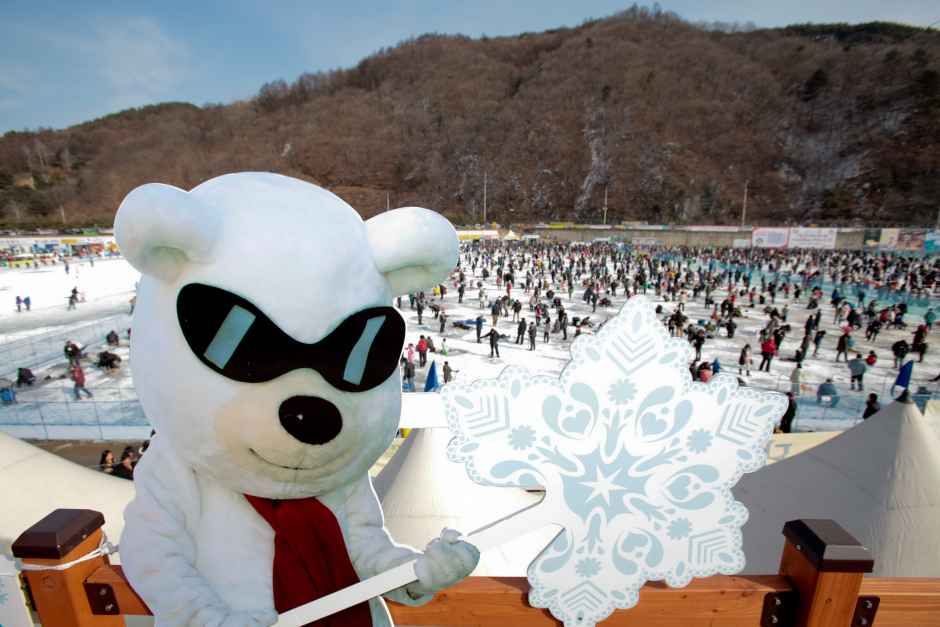
Hwacheon Sancheoneo Ice Festival

Hongcheon River Ice Festival
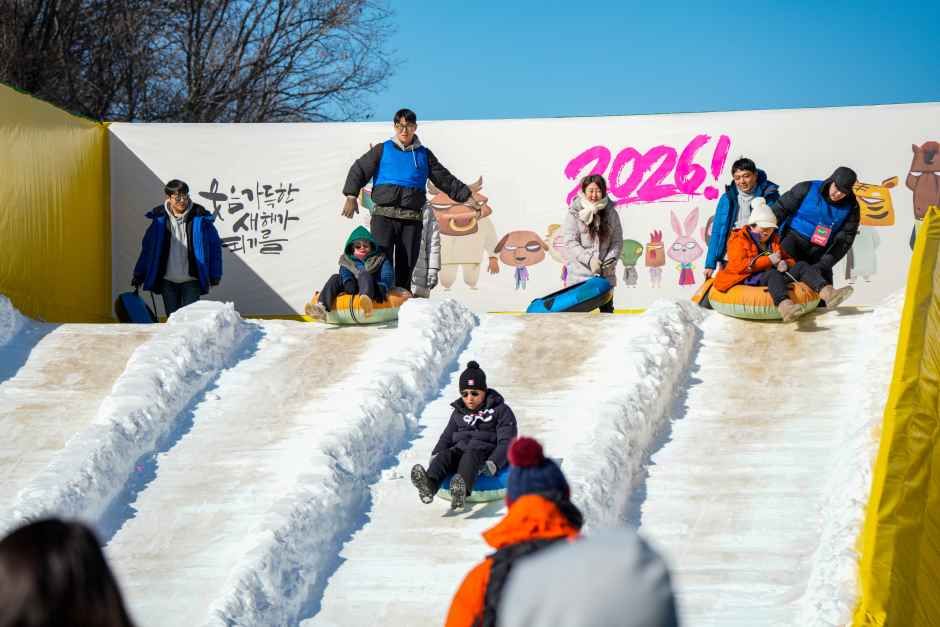
Cheorwon Hantangang River Ice Trekking Festival
Skiing, and what opening day really means
Korea's resorts are close to Seoul by the standards of ski countries — Vivaldi Park and Konjiam are inside a couple of hours, and the Pyeongchang resorts that hosted the 2018 Winter Olympics sit at the end of a KTX line.
Read opening dates carefully. In the 2025–26 season Yongpyong opened on 15 November and High1 and Vivaldi Park on 22 November, but an opening date means one or two runs on machine-made snow. The mountain is properly open from around late December, and the best conditions are January and early February. Resorts publish the coming season's dates in October.
Night skiing is the local habit and it is genuinely good — slopes are lit late, and it is how you avoid the weekend crush.
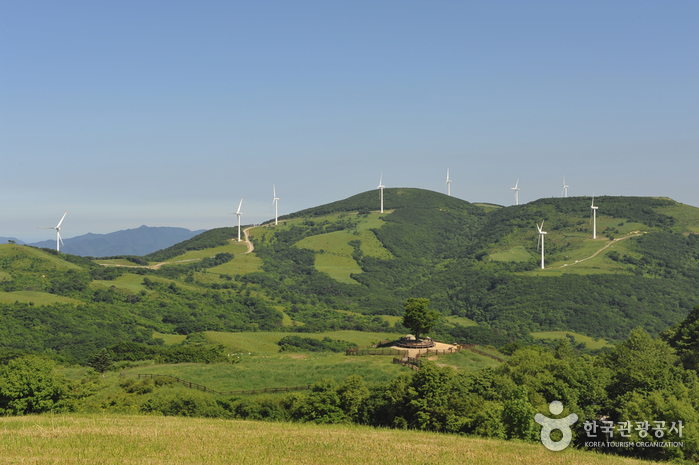
Daegwallyeong Special Tourist Zone
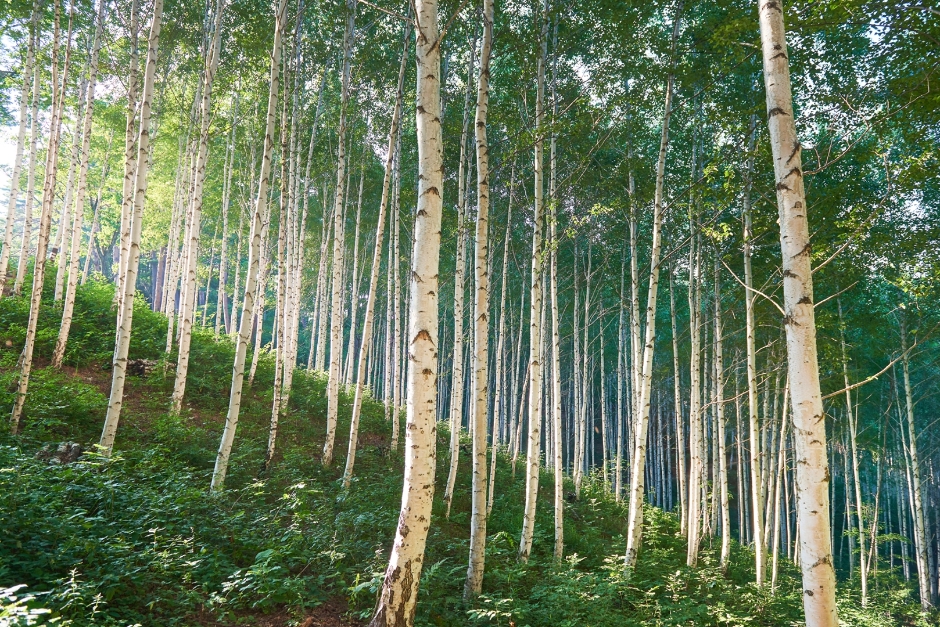
Wondae-ri Birch Forest (Whispering Birch Forest)

Taebaeksan National Park
The lights, which run all winter
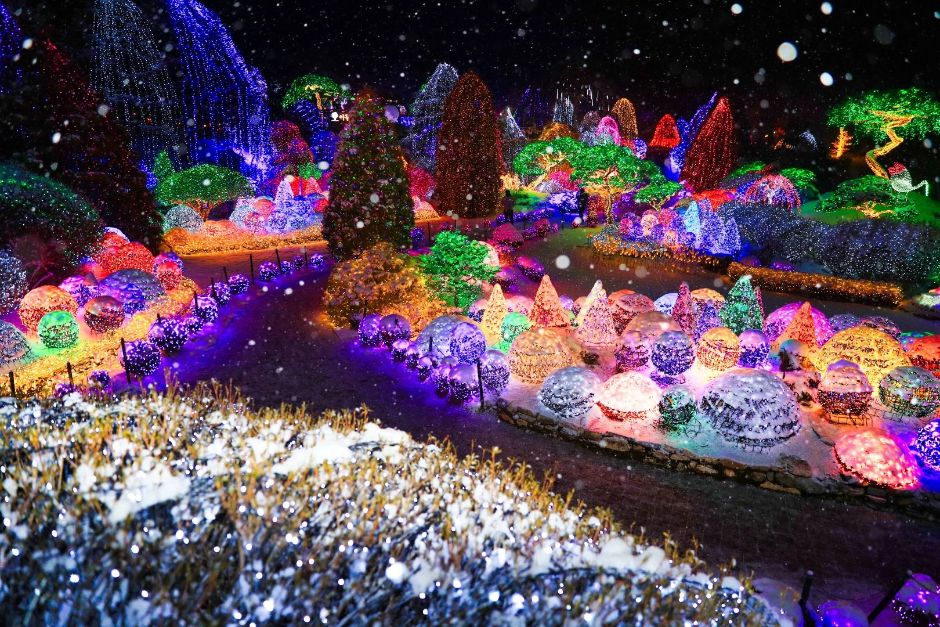
Illumination is the other half of Korean winter, and unlike the ice festivals it runs for months rather than weeks — most displays open in early December and stay up into February or March. The Garden of Morning Calm, an hour and a half east of Seoul, lights its whole hillside garden after dark and pairs with Nami Island on the same day trip. In the cities, Seoul floats lantern displays along the Cheonggyecheon stream and projects onto Gwanghwamun, and Busan strings Gwangbok-ro end to end.
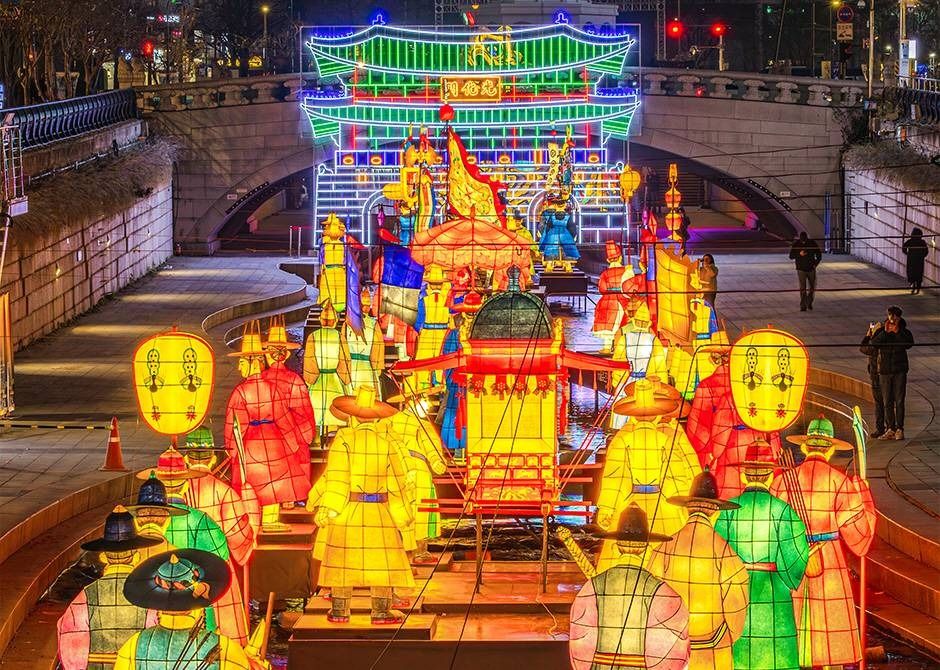
Seoul Lantern Festival

Gwangbok-ro Winter Light Tree Festival
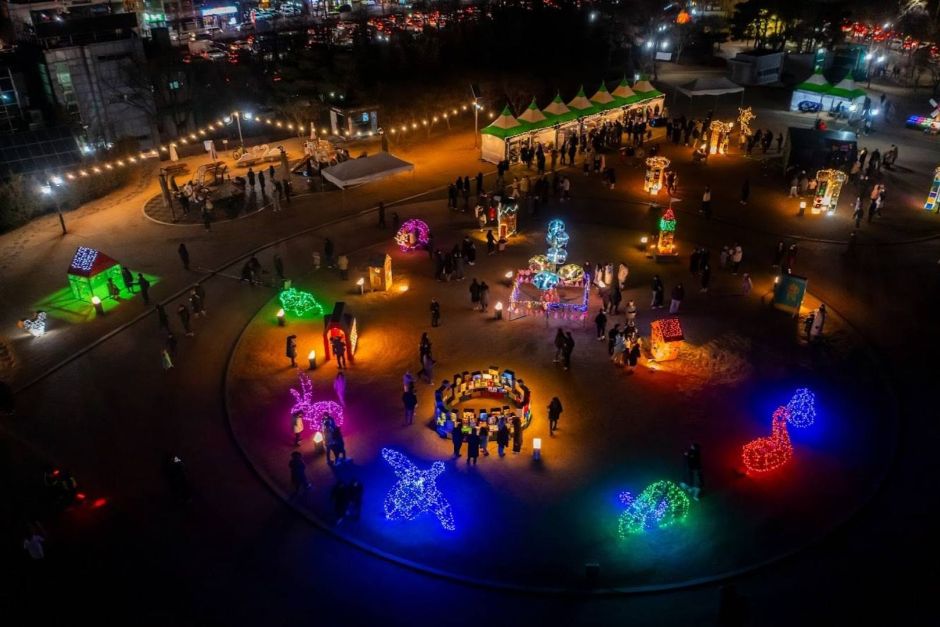
Suseong Light Art Festival
Seoul, when it is too cold to be outside
Winter is the season the palaces are worth most. Gyeongbokgung under snow, with the mountains behind it, is the photograph everyone wants and almost nobody plans for; and Changdeokgung's Huwon garden reads completely differently with the leaves gone. The Seoul 3-day guide plans around the closing days.
When it turns genuinely cold, the answer is the Korean one: go indoors and get warm on purpose. A jjimjilbang — a public bathhouse with heated rooms and floor space, open around the clock — costs very little and is the single most characteristic winter experience the country has. Underfloor heating, ondol, is why Korean rooms are warm at the floor and cool at head height, and why shoes come off at the door.
Street food is at its best now, because most of it is winter-only: hotteok (a griddled pancake with molten brown sugar inside), bungeoppang (a fish-shaped pastry with red bean), and roast sweet potatoes sold from drum ovens. Bungeoppang carts appear in December and vanish in March, and finding one is a small national obsession.
Sunrise on the first of January
Haemaji — going to watch the first sunrise of the year — is a real mass custom rather than a tourist event, and the east coast fills up overnight for it. The well-known spots are Jeongdongjin, where the railway line runs along the beach, Homigot with its bronze hand rising out of the sea, and Ganjeolgot, which claims the earliest sunrise on the mainland.
Practically: accommodation on the east coast sells out for 31 December months ahead, trains run through the night, and it will be several degrees below freezing on an exposed shore before dawn. It is worth doing once, and it is not a casual outing.


What to bring
Layers, and a real coat. The temperature swing between a heated subway car and an exposed street is large and constant, so anything you cannot open or take off will make you miserable. Bring gloves and something over your ears — the wind does the damage, not the air temperature. Indoor heating is generous, so a heavy jumper under a coat is worse than a thin one under a warm coat.
Skip the snow boots unless you are going to Gangwon. City pavements are cleared quickly and are dry more often than not.