Money in Korea: cards, cash, WOWPASS and ATMs
Korea runs on cards. A foreign Visa or Mastercard will pay for almost everything you do in person — but it fails in a few specific places, and those are the ones that catch visitors out. Here is what works, what does not, and how much cash you actually need.
- Bring a Visa or Mastercard (ideally two, from different banks). Amex works in hotels and department stores, much less elsewhere.
- Carry ₩50,000–100,000 in cash for market stalls, street food and topping up a T-money card.
- Get cash from ATMs marked “Global” at bank branches, or exchange cash in Myeongdong — not at the airport if you can avoid it.
- No tipping, anywhere. Prices include tax.
Where foreign cards work, and where they do not
| Works | Hotels, restaurants, cafés, convenience stores, department stores, Olive Young and cosmetics shops, museums and palaces, standard and deluxe taxis, KTX tickets bought at the station. Contactless (tap) payment is accepted at most newer terminals; otherwise the card is inserted. You are rarely asked for a PIN or a signature for small amounts. |
|---|---|
| Often fails | Korean websites and apps. Many Korean shopping sites, delivery apps and some booking pages only accept Korean-issued cards. Kakao Pay and Naver Pay, the wallets locals use, generally will not take a foreign card for a short-term visitor. Book trains on the Korail English site, and use global platforms for tickets and tours. |
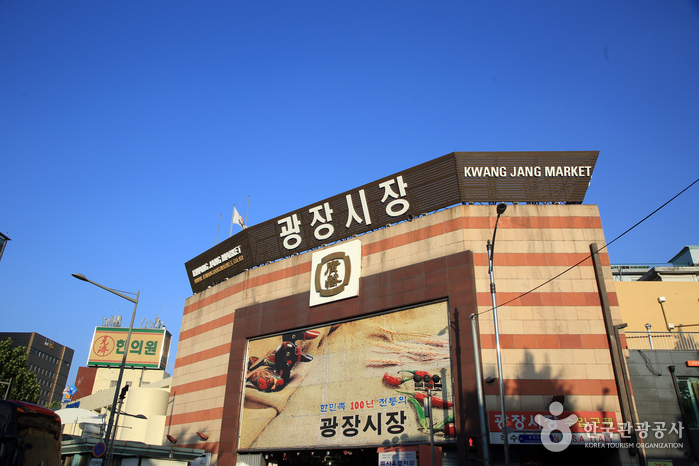
| Cash only | Many traditional market stalls and street-food carts, some small old restaurants, and topping up a T-money card at convenience stores and station machines. |
| Subway machines | Since 17 March 2026, the newer ticket machines in Seoul subway stations (Lines 1–8) take foreign Visa and Mastercard for single tickets, the Climate Card and its short-term passes, with a service fee of about 3.7%. You still cannot tap a foreign card at the gates or on buses — you need a transport card. |
Transport cards and WOWPASS
| T-money | The tap card for subway, buses and most taxis nationwide, a few thousand won at any convenience store. Top it up with cash. Full details in getting around Seoul. |
|---|---|
| Climate Card | Seoul’s unlimited subway-and-bus pass, with 1-, 2-, 3-, 5- and 7-day versions for visitors. Worth it only if you ride four or more times a day; see Korea on a budget for the maths. |
| WOWPASS | A prepaid card for visitors. You load it at WOW Exchange machines — in more than 70 Seoul subway stations, some hotels and Gimpo Airport (not Incheon) — with foreign cash in around 16 currencies, and then pay with it in shops like a Korean debit card. It also has a T-money chip for transport, but that part is a separate balance topped up with won cash; the shop money does not pay your bus fare. Useful if your home card charges heavy foreign-transaction fees; pointless if it does not. |
Getting cash: ATMs
- Look for machines marked Global ATM or showing the Visa/Plus and Mastercard/Cirrus logos. Bank branches of Woori, KB Kookmin, Shinhan and Hana are the usual choices; most have an English menu.
- Expect a Korean-side fee of roughly ₩2,000–4,000 per withdrawal, on top of whatever your own bank charges. Convenience-store machines are open all night but tend to charge more and allow smaller withdrawals.
- If the machine offers to convert the amount into your home currency, decline and be charged in won — the machine’s rate is worse than your bank’s.
- If one machine rejects your card, try another bank before assuming the card is blocked. Tell your bank you are travelling.
Exchanging cash
- Myeongdong’s licensed exchange shops usually give the best rates in Seoul for US dollars, euros, yen and other major currencies. Compare two or three; the rate board is outside.
- Banks give fair rates on weekdays but keep office hours and take longer.
- Airport counters are the most convenient and usually the worst rate. Change only what you need for the first day.
- Bring clean, recent notes — damaged or very old bills may be refused or get a lower rate.
What things cost
| Subway ride | ₩1,550 with a transport card (base fare, Seoul) |
|---|---|
| Coffee | ₩2,000–6,500, from chain takeaway to a smart café |
| Market or street food | ₩4,000–8,000 a plate |
| Restaurant meal | ₩10,000–20,000 a person for an ordinary Korean dinner |
| Palace entry | ₩1,000–3,000; free if you wear hanbok |
For a full day-by-day budget, see Korea on a budget.
Paying in restaurants
- You usually pay at the counter on the way out, not at the table. Some places have a tablet or kiosk at the table or by the door.
- There is no tipping and no service charge in ordinary restaurants, taxis or hotels. Leaving money on the table will more likely confuse than please.
- Splitting the bill is fine — say how many ways at the counter, or let one person pay and settle up later.
- Prices on menus and price tags already include the 10% VAT.
Getting the VAT back
Tourists can claim back most of the 10% VAT on shopping of ₩15,000 or more at stores showing a Tax Free or Tax Refund sign — often instantly at the till. The rules and the airport routine are in tax refunds in Korea.
Tax refundsGetting around SeouleSIM and appsKorea on a budgetKorea basics
Written by the Korea Almanac editor, a solo operator living in Korea. Last updated 12 November 2026. Prices, dates, opening hours and transport details are checked against the organiser, venue, transport operator or Korea Tourism Organization — how guides are written and checked. Spotted something out of date? Let us know.
Quick answers
Do foreign credit cards work in Korea?
Visa and Mastercard work in almost all shops, restaurants, taxis and hotels; Amex in fewer places. They often fail on Korean websites and apps, and in Kakao Pay or Naver Pay.
How much cash should I carry in Korea?
About ₩50,000–100,000 for market stalls, street food and topping up a T-money card, which only takes cash.
Can I tap my foreign card on the Seoul subway?
Not at the gates or on buses. Since March 2026 the newer subway ticket machines accept foreign cards for single tickets and the Climate Card, with a fee of about 3.7%.
Do you tip in Korea?
No. There is no tipping in restaurants, taxis or hotels, and prices include VAT.