How to see a baseball game in Korea
The KBO League is the thing visitors most often say they wish they had known about sooner. It is cheap, it is loud in a way American baseball is not — every batter has a song, a cheer captain and a squad of dancers leading 20,000 people through it — and you can bring in your own food and beer. The regular season runs from late March to early October and the postseason through October into early November, so autumn visitors get the best of it. This page covers how to get in, which stadium to pick, and what the night is like.

| Late March – early October | Regular season, 144 games a team. Weekday games start around 18:30, weekend games in the afternoon or at 17:00. Mondays are off. |
|---|---|
| October – early November | Postseason: Wild Card, Semi-Playoff, Playoff, then the best-of-seven Korean Series. Tickets are the hardest of the year. |
| November – March | Off-season. The stadiums host concerts instead — see the venue guides for Gocheok Sky Dome and Jamsil. |
| Rain | Open-air games are called off for rain, often late; Gocheok’s dome is the only guarantee. Cancelled tickets refund automatically. |
Ten teams, nine stadiums
| Seoul · Jamsil | LG Twins and Doosan Bears share Jamsil Baseball Stadium, so there is a home game here most nights of the week. Sports Complex Station, Lines 2 and 9. The loudest crowd in Seoul when LG are winning. |
|---|---|
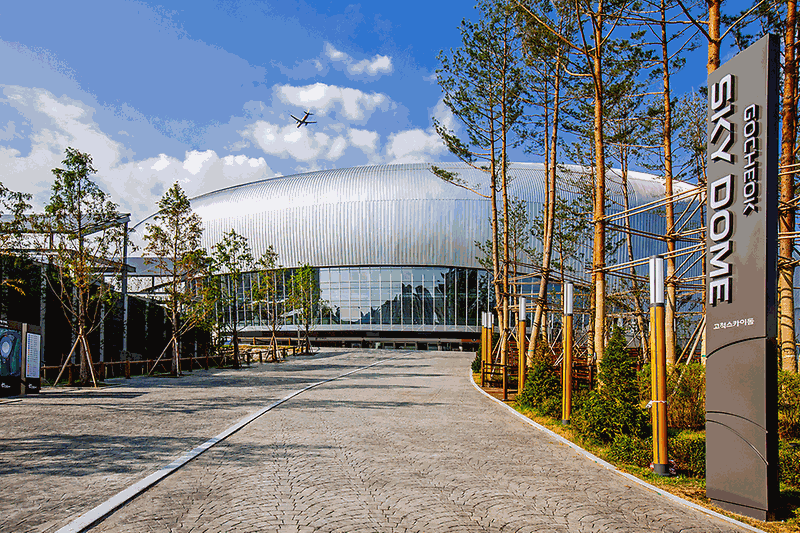
| Seoul · Gocheok | Kiwoom Heroes at Gocheok Sky Dome, the country’s only domed stadium. Guil Station, Line 1. The rain-proof choice, and usually the easiest Seoul ticket. |
| Incheon | SSG Landers at Incheon SSG Landers Field, next to Munhak Stadium. Munhak Sports Complex Station on Incheon Line 1. |
| Suwon | KT Wiz at Suwon KT Wiz Park, an hour south of Seoul on Line 1. |
| Busan | Lotte Giants at Sajik Stadium — the most famous crowd in the league, known for the orange plastic bags worn as hats and the collective shout of “Ma!” at opposing pitchers. Sajik Station, Busan Line 3. |
| Daegu | Samsung Lions at Daegu Samsung Lions Park, one of the newest and best-designed grounds. |
| Daejeon | Hanwha Eagles, in a brand-new ballpark that opened in 2025 and has been sold out most nights since. |
| Gwangju | KIA Tigers at Champions Field. The league’s most decorated club and a serious, passionate crowd. |
| Changwon | NC Dinos at Changwon NC Park, a short ride from Busan. |
Tickets: the honest version
Every club sells through one Korean platform — Interpark, Ticketlink or its own app — and most of them assume a Korean phone number and ID at sign-up. Overseas visitors have three realistic routes, in order of how often they work.
- The box office on the day. For most weekday games and many weekend ones there are seats at the stadium ticket windows an hour or two before first pitch, ₩10,000–25,000 for ordinary seats and less in the outfield. This is how most foreign visitors actually get in. It does not work for the big sellouts: LG or Doosan at Jamsil on a weekend, Lotte in Busan, Hanwha in Daejeon, and anything in the postseason.
- Packages sold to overseas visitors. Tour platforms list tickets for Seoul games in the foreign-visitor market, sometimes with a guide who explains the cheering. Dearer than the window, but bookable from abroad with a foreign card and worth it for a weekend game.
- A Korean friend. Anyone with a Korean account can buy on your behalf and hand over the tickets on the platform or in person. Postseason tickets are released online and sell out in minutes, so this is the only way in for October.
Resold tickets on unofficial sites carry the same risk as concert tickets: clubs void them. If a price looks too easy for a sold-out game, it is.
What the night is like
| The cheering | Each team has a cheer captain with a microphone and a squad of cheerleaders on a stage in the stands. Every batter has his own song; the crowd sings all of them. Inflatable thundersticks are sold at the gate for a few thousand won and are compulsory in spirit. Sit in your team’s section (home first base, away third base) to be in it. |
|---|---|
| Food | You can bring in anything except glass. The convention is fried chicken — the delivery riders wait at the gates — and canned beer or draught from the concourse. Convenience stores inside the stadiums sell the rest. |
| Length | Three hours and a bit. Nobody leaves early; the late innings are when the songs get loudest. |
| Weather | April and October evenings are cold once the sun goes; July and August are hot and humid and the rain calls come late. Bring a layer either way. |
| Getting out | The stations cope better than at concerts, because the crowd leaves over half an hour rather than all at once. Jamsil and Gocheok both empty in 20–30 minutes. |
Which stadium to pick
For a first game in Seoul, Jamsil on a weeknight: the Twins or the Bears at home, tickets at the window, and the cheering at full strength. If rain is in the forecast or the visit is short, Gocheok: the dome guarantees play and the Heroes rarely sell out. If you are in Busan, Sajik is the one stadium worth planning a trip around — the Giants’ crowd is the league’s spectacle whatever the score — and the Busan guide fits it into two days.
Football, briefly
K League 1 runs from late February or March to November with twelve clubs. In Seoul, FC Seoul play at Seoul World Cup Stadium in Sangam (World Cup Stadium Station, Line 6), where the national team also plays its home qualifiers; tickets for league games are easy on the day and cheap, and the atmosphere is friendlier than the stadium’s size suggests. Incheon United, Suwon FC and Ulsan HD are the other visitor-friendly grounds. It is a good second night if the baseball has got under your skin.
Gocheok Sky DomeJamsil Sports ComplexHow Korean ticketing worksTrip Planner