Korea’s cherry blossom in 2027: planning before the forecast exists
Korea’s blossom is a front, not a date. It opens on Jeju in the last week of March, reaches Busan and Jinhae a few days later, and arrives in Seoul in the first week of April — with each city getting roughly a week of full bloom that one rainy night can end. No forecast for 2027 exists yet: the two private forecasters that issue them publish in late February and revise into March. This page explains how to book a trip anyway, and is updated the day the first forecast lands.
Korea’s national weather service stopped publishing blossom forecasts years ago; the dates everyone quotes come from two private forecasters, Weathernews Korea and Kweather, whose first 2027 forecasts are expected in the last week of February 2027. Expect a revision in mid-March. We will add the numbers here the day they appear.
How the front usually moves
The table gives the long-run average first-bloom date and the range the last six years actually produced. The gap is the point: since 2021 every season has run earlier than the 30-year average, sometimes by two weeks, and the year-to-year spread is about ten days. “Full bloom” — the week you want — follows first bloom by 5 to 7 days.
| Jeju (Seogwipo) | Average around 24 March; recent years 18–26 March. The first blossom in the country and the least crowded. |
|---|---|
| Busan · Jinhae | Average around 28 March; recent years 19–30 March. The Jinhae festival is timed to this and is the single largest blossom event in the country. |
| Daegu · Gyeongju | Average around 29–31 March; recent years 22 March – 2 April. Gyeongju’s Bomun Lake road and the royal tombs are among the best settings anywhere. |
| Jeonju · Daejeon | Average around 1–2 April; recent years 25 March – 3 April. |
| Seoul | Average around 8 April; recent years 24 March – 5 April. Yeouido and Seokchon Lake peak a few days after the official first bloom. |
| Gangneung · east coast | Average around 5–8 April; recent years 30 March – 8 April. Gyeongpo Lake is the classic, a week behind Seoul in a normal year and level with it in a warm one. |
Where, in order of how much it is worth
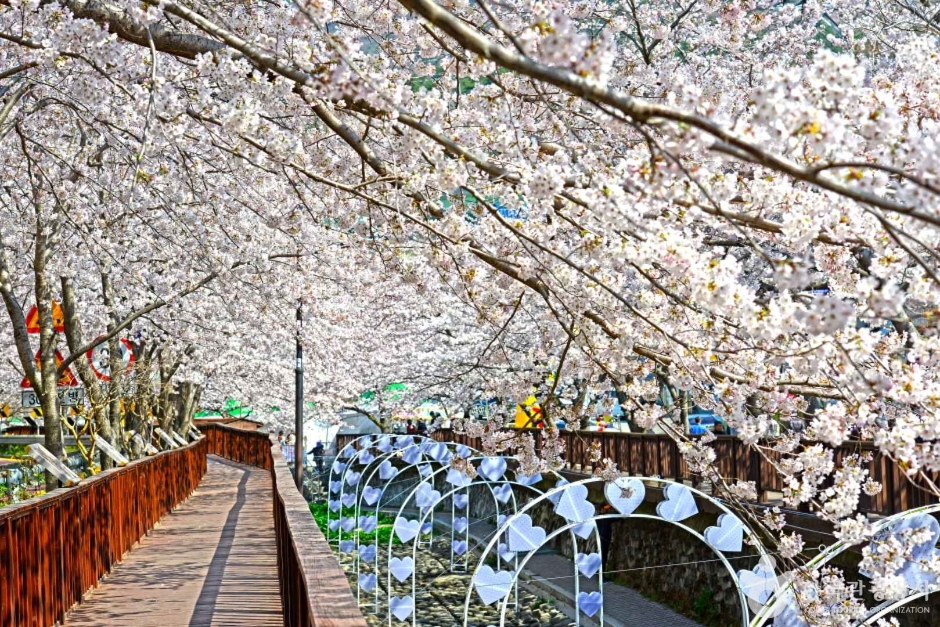
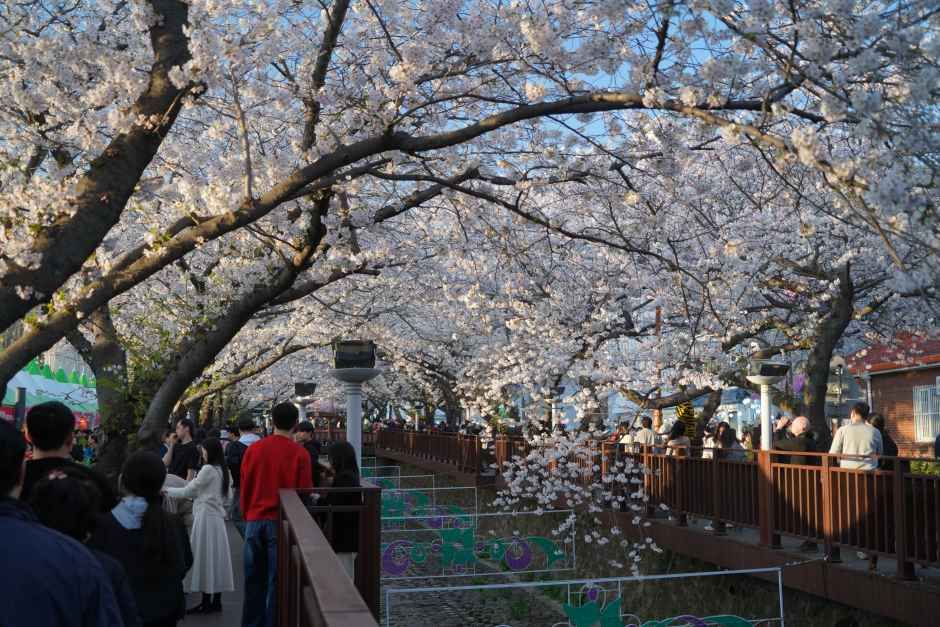
| Jinhae | A naval town near Busan with some 350,000 trees and a ten-day festival, the Gunhangje. The two photographs are the Yeojwacheon stream, with its small bridges, and Gyeonghwa Station, where the trees arch over a railway line. Hotels in Jinhae itself are effectively unbookable; everyone comes from Busan for the day, by KTX to Changwon Jungang or on a coach tour. |
|---|---|
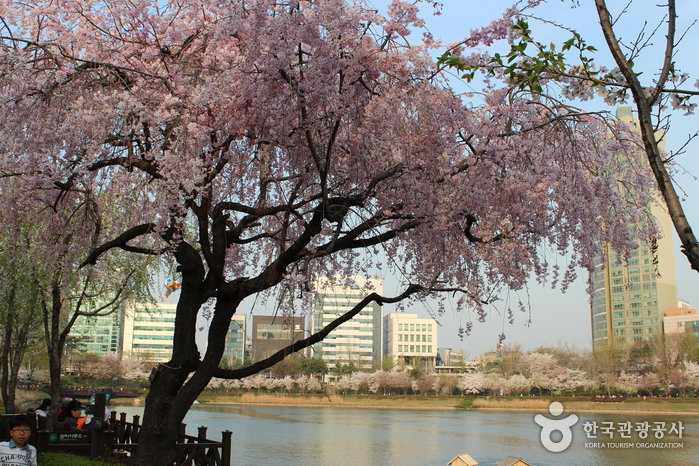
| Seoul | Yeouido’s Yunjung-ro behind the National Assembly is the big one and closes to traffic for its festival; Seokchon Lake in Jamsil rings the water with trees under Lotte World Tower and is lit at night; Gyeongui Line Forest Park, Namsan’s northern road and the Jungnangcheon and Anyangcheon stream paths are the local alternatives with a tenth of the crowd. |
| Gyeongju | The road around Bomun Lake, the trees among the royal tombs at Daereungwon, and Heungmusa road. Blossom week is the one crowded week of Gyeongju’s year; see the Gyeongju guide for the rest of it. |
| Jeju | The king cherry, a broader-petalled native variety, along Jeonnong-ro in Jeju City and Noksan-ro in the south-east, where the trees run above fields of yellow rapeseed in flower at the same time. Late March. |
| The south-west | Hadong’s ten-li road to Ssanggyesa temple and the Seomjin river at Gurye, both inland from the south coast, both late March, both less known abroad than they deserve. |
| Gangneung | Gyeongpo Lake, a 4 km ring of trees round the water with the sea a few hundred metres away, in the second week of April most years. |
Jinhae Gunhangje Festival

Yeongdeungpo Yeouido Spring Flower Festival
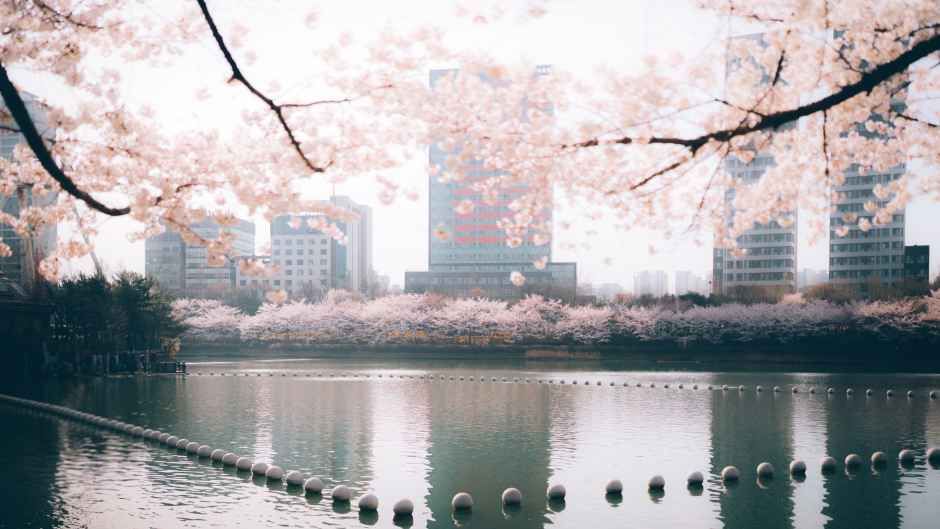
Seokchon Lake Cherry Blossom Festival
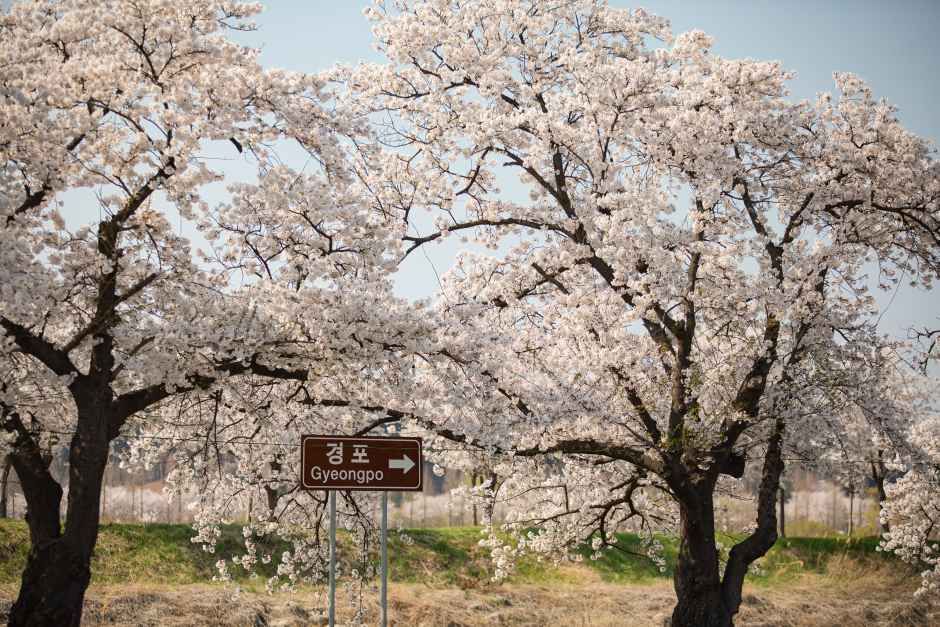
Gangneung Gyeongpo Cherry Blossom Festival
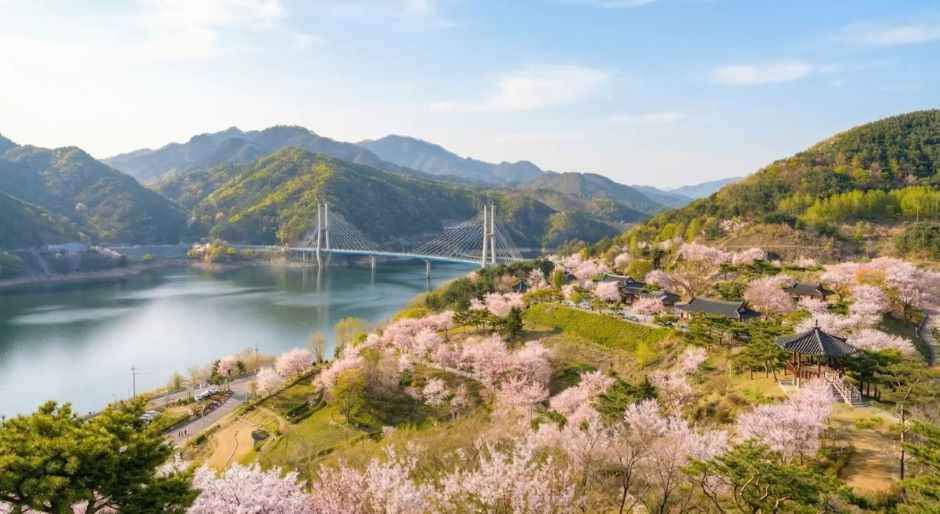
Jecheon Cheongpung Lake Cherry Blossom Festival
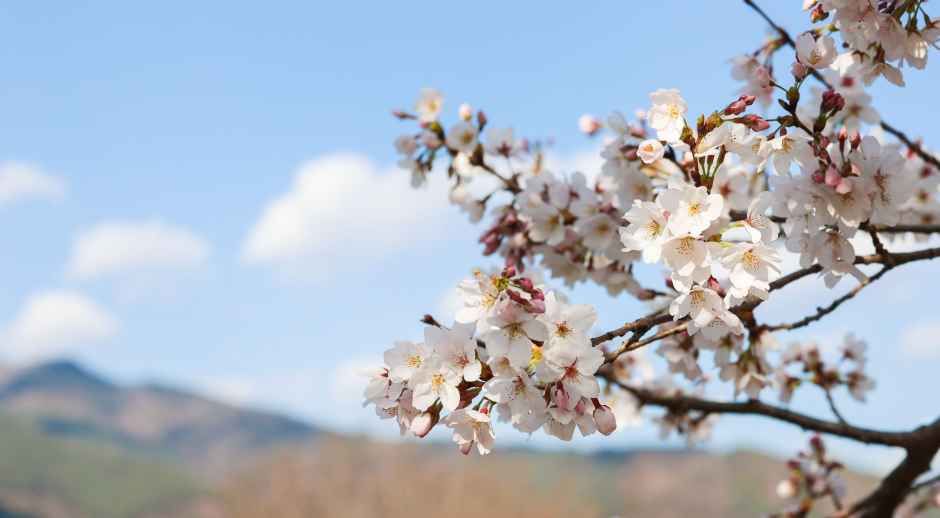
Gurye 300-ri Cherry Blossom Festival
How to book a trip to a date that does not exist yet
The method that works, used by people who do this every year:
- Aim for the last days of March to the first week of April and plan to be in the south early and Seoul late. That order matches the front in almost every year on record, so a ten-day trip from Busan to Seoul catches full bloom somewhere whatever the season does.
- Book refundable: flights that allow date changes, hotels on free cancellation. When the late-February forecast arrives, shift by up to a week.
- Do not book the Jinhae festival dates as if they were the blossom dates. The festival is fixed months ahead; in an early year the trees are bare by the last weekend, in a late one they open after it. Watch the forecast, not the poster.
- Have a second region. Rain on a full-bloom weekend strips a city in a night. Seoul plus Gyeongju, or Busan plus Gangneung, gives you a fallback a train ride away.
What the crowds are like
Yeouido on the festival weekend is one of the most crowded places in Korea, with the subway station managed by staff and the road a slow shuffle. Go on a weekday at 07:00 and it is a different park. Jinhae’s Gyeonghwa Station is a queue for a photograph; Yeojwacheon is better and larger. Seokchon Lake at night is busy but moves. Everywhere else on the lists above is manageable, and the stream paths in Seoul are simply quiet.
March festivalsApril festivals2 days in Gyeongju2 days in BusanTrip Planner