What to eat in Busan
Busan’s food grew out of its port and its war years, when refugees from the north made do with what the city had. The result is some of the most distinctive cooking in Korea: rich pork soups, cold wheat noodles, the freshest seafood in the country, and the best street snacks. Most of it is cheap.
The dishes
| Dwaeji gukbap | Busan’s signature: a milky pork-bone soup with slices of pork, poured over rice, and seasoned at the table with salted shrimp, chives and chilli paste. Breakfast, lunch or a late-night cure. |
|---|---|
| Milmyeon | Cold wheat noodles in an icy, tangy broth, created by wartime refugees missing the buckwheat noodles of the north. A summer essential. |
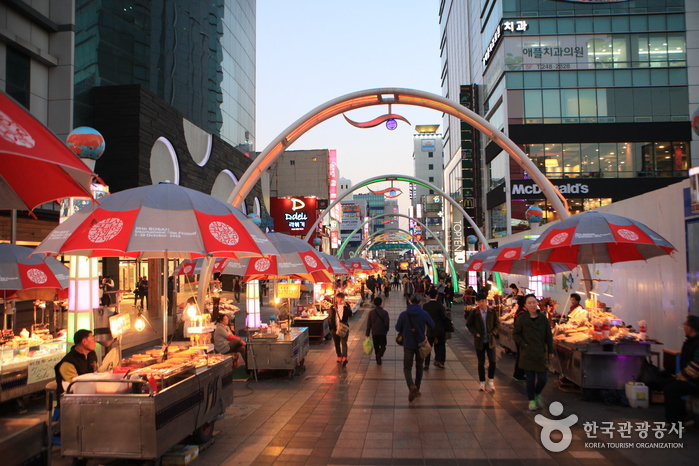
| Ssiat hotteok | Fried sweet pancakes split open and stuffed with sunflower and pumpkin seeds, sold from stalls around BIFF Square. |
| Eomuk (fish cake) | Busan made Korean fish cake famous; eat it on a skewer with hot broth from a street stall, or browse the bakery-style fish-cake shops. |
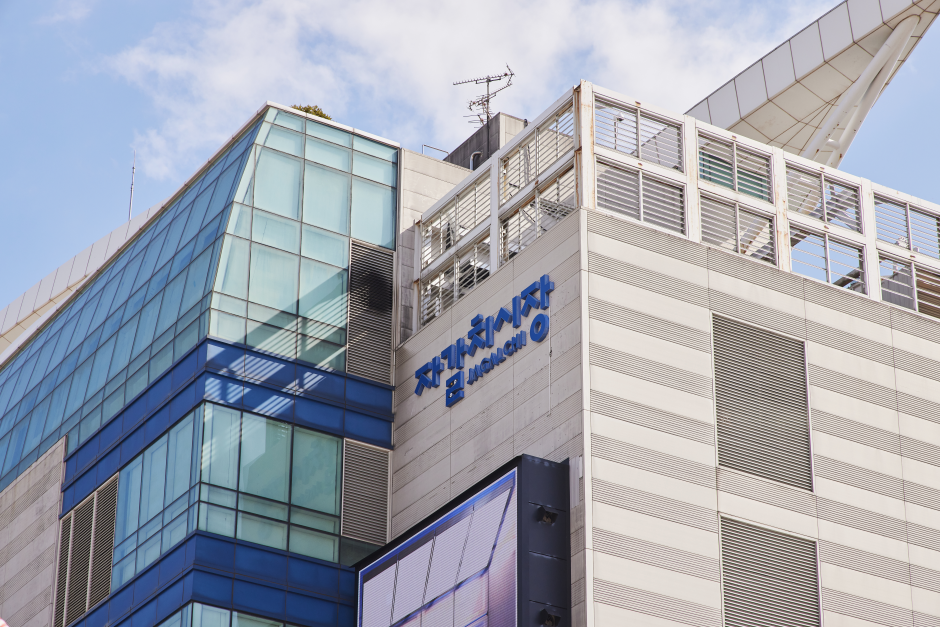
| Raw fish and seafood | Choose your fish at Jagalchi market downstairs and eat it upstairs, or at the raw-fish restaurants facing the sea at Gwangalli and Millak. |
| Dongnae pajeon | A thick green-onion and seafood pancake from the old Dongnae district, with makgeolli. |


Where to eat
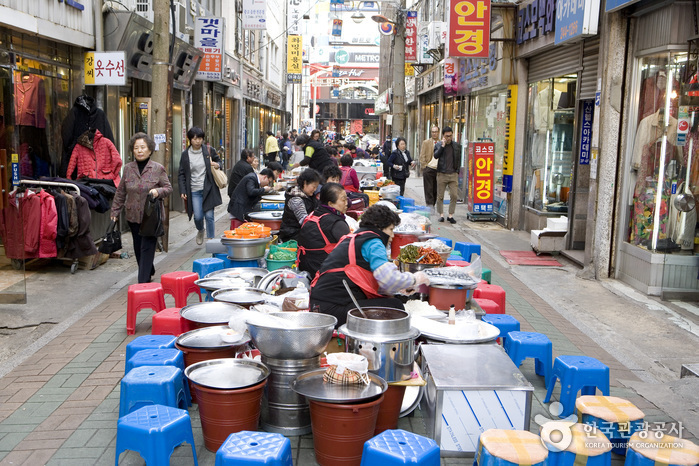
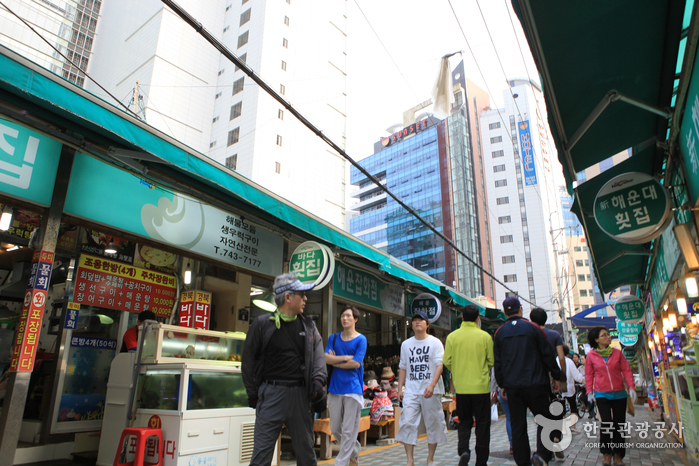
- Nampo: Jagalchi for seafood, Gukje Market’s food street and BIFF Square’s stalls for snacks.
- Seomyeon: the dwaeji gukbap alley and endless late-night restaurants.
- Haeundae: Haeundae Market’s food alley just back from the beach.
- Gwangalli and Millak: raw fish with a view of the bridge.
2 days in BusanWhere to stay in BusanEating in KoreaEverything in Busan